Serving more than food: How Springleaf Prata Place creates impact from the kitchen
For more than two decades, Springleaf Prata Place has built a name for itself around one of Singapore’s most familiar comfort foods – prata.
Since opening in 2003, Springleaf has become known for putting its own spin on prata, and multiple inventive prata creations.
But there’s another side to Springleaf that diners may be less familiar with. Behind the prata and the busy kitchens is a business that has made inclusive employment and giving back to the community part of its operations – the key ingredients that made it a “Company of Good”.
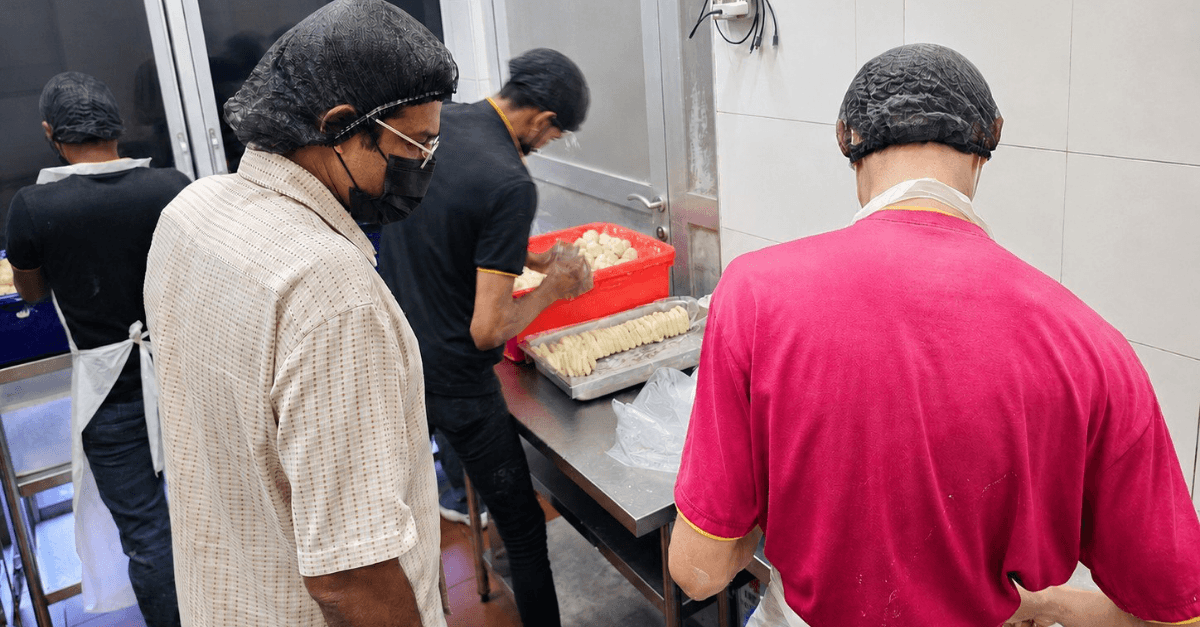
Operations Manager Mr Abinesh working alongside the Springleaf Central Kitchen team during daily dough preparation. Almost 100% of their dough is prepared with the contribution of their colleagues with disabilities.
From running the kitchen to supporting the people
“I joined Springleaf because I saw a company that was growing, but at the same time remained very people-oriented,” says Mr Abinesh Rajendran, Operations Manager at Springleaf. His role covers the Central Kitchen and the operational needs of Springleaf’s outlets. But over the years, it has grown beyond managing food production and efficiency.
A major part of his work today is supporting a diverse team, including colleagues with disabilities and special needs, and helping each person find a meaningful way to contribute. Today, that commitment is reflected in the numbers: 13 colleagues with disabilities represent 30% of the Central Kitchen team, with 100% of Springleaf's prata dough prepared with their contribution. That approach, he says, comes strongly from Springleaf’s founder and owner, Mr S.V. Gunalan, who has long believed in looking beyond what someone may struggle with to see what they can do.
It has also shaped Abinesh’s understanding of what it means to be a “Company of Good”. To him, doing business and doing good shouldn’t be separate: a good company creates opportunities for people, treats employees with dignity, supports its community and makes responsible choices while remaining sustainable.
In Springleaf’s Central Kitchen, he sees those ideas play out through the decisions the team makes every day.
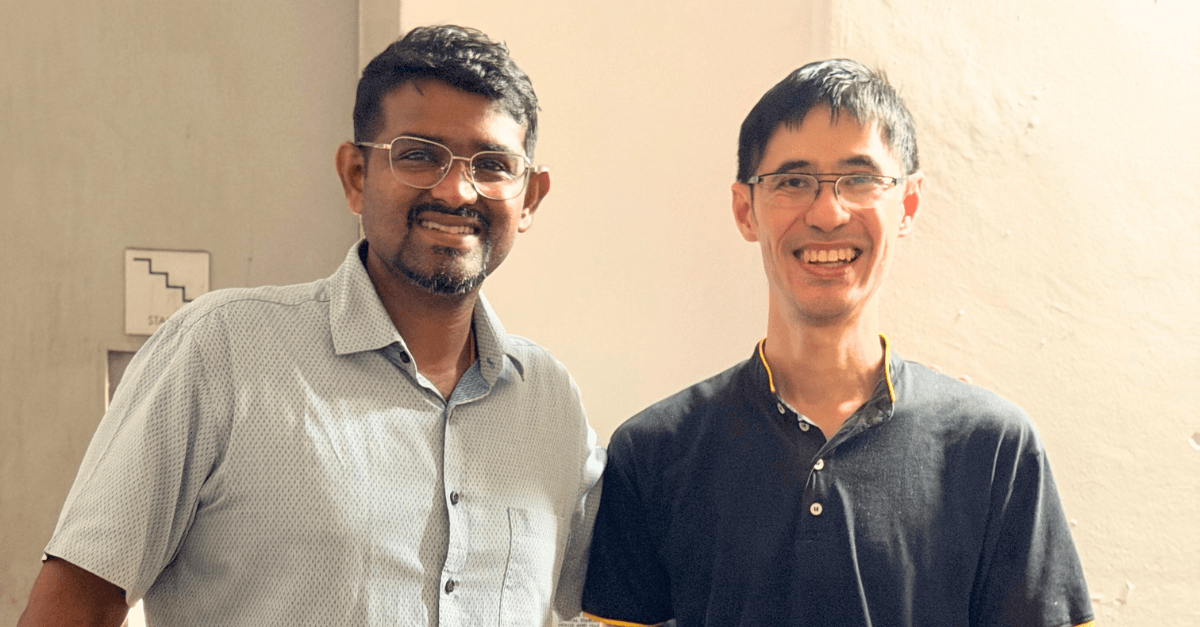
Springleaf Prata Place Operations Manager, Mr Abinesh, celebrating the birthday of Li Rui, one of Springleaf’s long-serving employees with special needs. Li Rui has been a valued member of the Springleaf family for 8 years.
Creating opportunities by looking first at what people can do
For Abinesh, one way Springleaf lives out what it means to be a “Company of Good” is by making room for people to contribute, including those who may otherwise find it harder to secure meaningful employment. One of the first things he noticed at Springleaf was its willingness to give people a chance. “If someone is willing to work, we should try to find a way for that person to contribute,” he explains. In the Central Kitchen, that philosophy is visible every day. Colleagues with different abilities work alongside the rest of the team, contributing to the same operations and working towards the same standards.
Supervisors and team members learn to communicate more clearly and patiently. Tasks may be structured differently, processes simplified where needed and guidance provided at a pace that works for the individual.
Springleaf also works closely with the Autism Resource Centre (ARC) and SG Enable, whose job coaches support both employees and the operations team. The coaches help the team understand individual needs, identify suitable responsibilities and work through challenges when they arise.
These job coaches take time to understand the employee, the workplace and Springleaf’s operational requirements, then work with the team to find practical solutions. Over time, many of them have become familiar faces in the Central Kitchen, shares Abinesh. “They have somewhat become part of the Springleaf family,” he says.
More importantly, support doesn’t mean lowering expectations – food safety, hygiene and workplace safety remain non-negotiable. The goal is to give each person the support they need to meet those standards and succeed.
Making inclusion work in the real world
Another lesson Abinesh has learned about being a “Company of Good” is that good intentions have to work alongside the realities of running a sustainable business.
Inclusive hiring sounds like a noble idea, but making it work for a busy food business is more complex. Every day, Springleaf has to balance staffing, productivity, costs, tight timelines and safety requirements. Bringing someone into the team may require additional training, closer supervision or time to find the tasks that best match that person’s strengths.
For Abinesh, this is exactly why inclusion can’t stop at offering someone a job. “Inclusive hiring can’t just be about giving someone a job – it’s about creating an environment where that person has the support and opportunity to stay, contribute and grow,” he says. Partnerships with ARC and SG Enable help make that possible, but so does the willingness of managers and colleagues to adapt how they lead and communicate.
“Sometimes we take simple instructions for granted,” he says. “Working with colleagues with special needs has taught me that, as a manager, I need to understand that different people learn, communicate and respond differently.”
The experience is equal parts challenging and rewarding. He recalls the satisfaction of seeing someone who once needed significant guidance eventually complete a task confidently and independently. Those moments matter to the whole team because they show what’s possible when people are given time, support and trust.
“Our colleagues with special needs are not here simply because Springleaf wants to practise inclusive hiring,” he says. “They are our colleagues, they contribute to our operations, and they are part of our team.”
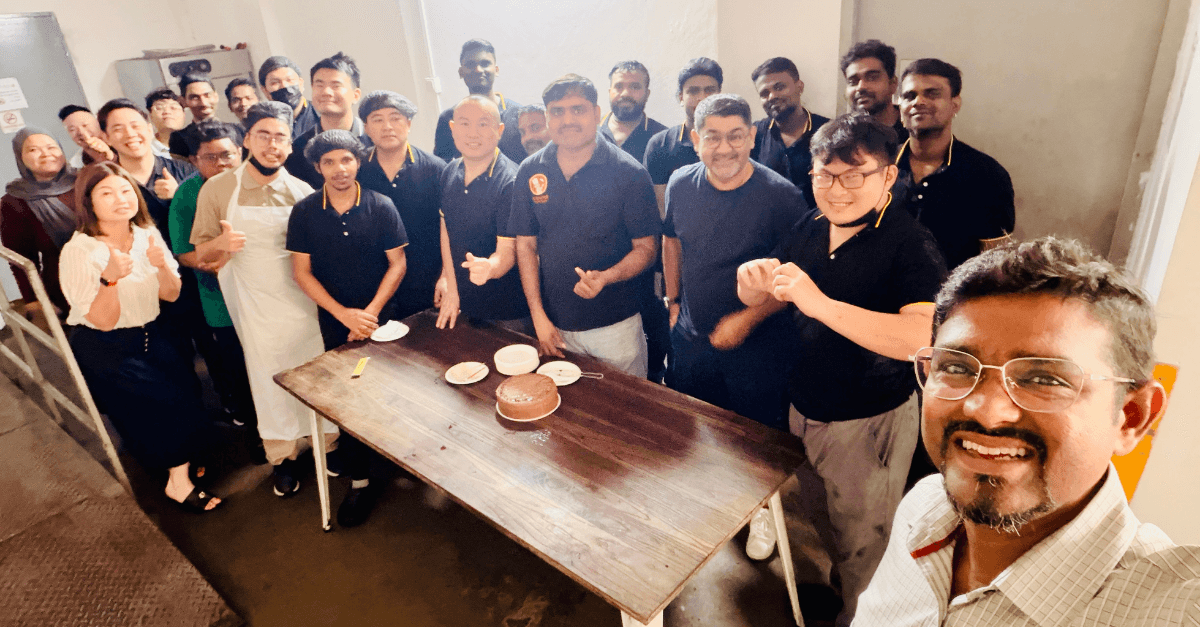
A birthday celebration with the Springleaf Central Kitchen team, bringing together colleagues of different abilities, alongside their dedicated job coaches. Moments like these reflect the close bonds they have built over the years.
Using what the business does best to serve the community
Being a “Company of Good” also means looking beyond the organisation and asking how the business can use its strengths to contribute to society.
One initiative Abinesh is particularly proud of is the Springleaf Sponsor-A-Meal programme, which brings together customers, employees and partners to provide meals to beneficiaries across the community.
For the Central Kitchen team, the connection is direct, as they help prepare the food. “When we see hundreds of meals being packed and sent out, we know that what we do in the kitchen has an impact beyond our restaurants,” he says. What makes the programme especially meaningful to him is that everyone can take part, including employees with special needs.
The programme brings together the two halves of Springleaf’s approach to doing good: creating opportunities for its own people while using its everyday capabilities to support others. It’s a great example of how a business can use what it already does well to serve a greater purpose. “It turns something we already do every day, which is preparing food, into an opportunity to serve the wider community,” he says.
What a "Company of Good" looks like from the inside
These experiences have changed Abinesh’s understanding of what a successful business should look like. Of course, financial sustainability matters, as a business needs to perform well to provide stable jobs, grow and continue supporting its community. But he has also seen that business performance and social responsibility don’t need to sit on opposite sides.
“A business can grow while still making room for people who may otherwise find it harder to secure meaningful employment, and it can use its resources and capabilities to give back to the community,” he says.
“It’s not always about one big CSR project,” he says, much like Springleaf’s Sponsor-A-Meal programme. “Very often, doing good is found in the small decisions we make every day and in how we choose to treat the people around us.” These small decisions could take the form of spending extra time teaching a colleague, finding a role that allows someone to contribute, communicating with more patience or choosing to see a person’s strengths before their limitations.
Read more #StoriesofGood here : COG 10 A Decade of Doing Good