Inside smol café & salad bar: How a food business turns every sale into social impact
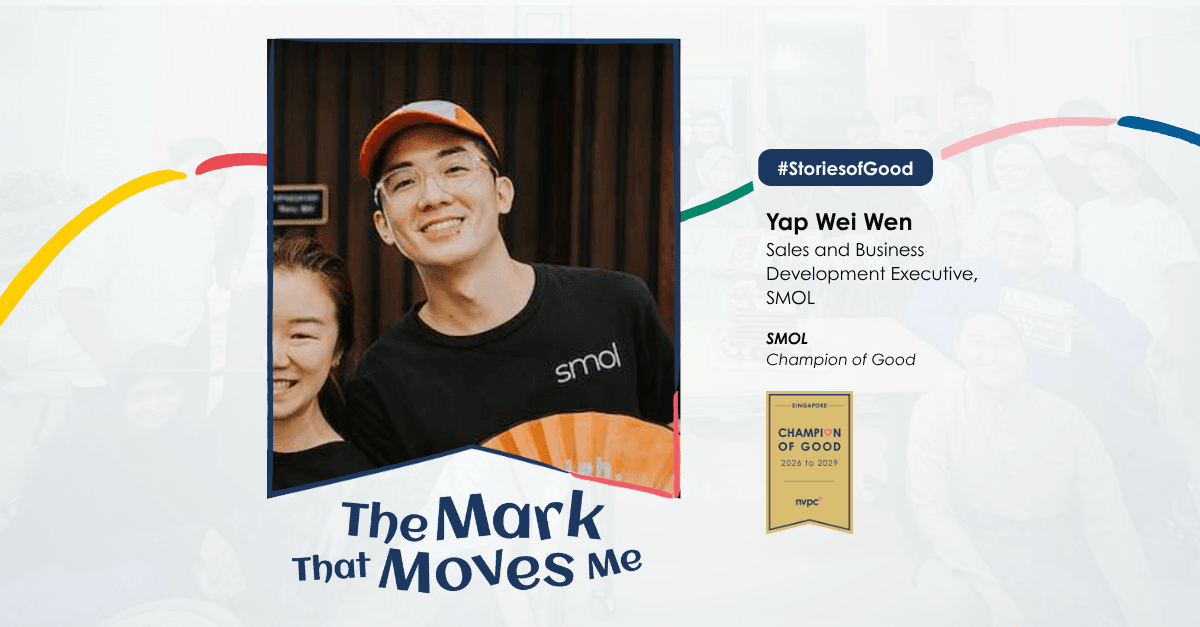
In the food and beverage (F&B) industry, tender submissions often centre on competitive pricing and operational logistics. So when Yap Wei Wen, a Sales and Business Development Executive at smol café & salad bar, was tasked with preparing one of his first tender submissions for the company, the social enterprise’s deliberate focus on inclusive hiring stood out.
As he pulled together the proposal checklist, he began to notice how much of the business had been structured around the strengths of its team, including colleagues who are persons with disabilities (PWDs).
Inclusion wasn’t just another feel-good story added to a pitch, given how much it influenced how the team worked and how smol delivered for clients. “Coming from more conventional sales environments, that was refreshing,” he says. “I wasn’t selling a story – I was selling something real.”
For Wei Wen, that moment captured what being a “Company of Good” can look like from the inside. At smol, doing good is built into everyday decisions – from who gets the opportunity to work, to what goes into a meal, to how surplus food is handled and even which commercial deals the business is prepared to walk away from.
Selling more than a meal
Wei Wen spends much of his day on client outreach, marketing ideas and new collaborations. In another sales role, success might be measured mainly by the next target or contract. At smol, he finds another sense of purpose in the job.
He had already known about the company’s work with PWDs and its sustainability efforts before joining. What drew him in was the chance to make those commitments part of the sales conversation itself. “In a lot of sales and business development jobs, you’re just chasing numbers,” he explains. “Here, every pitch is also a pitch for inclusive hiring.”
This gives each successful deal what Wei Wen calls a “double payoff”: revenue that keeps the business healthy, and more stable work for the people who make the business possible.
It also changes what he is asking clients to buy into. A catering order or partnership still needs to make commercial sense. But it can also support a business model that creates value for people beyond the customer who places the order.
What putting people first looks like day to day
When Wei Wen joined smol, inclusive hiring was already one of the company’s best-known commitments. What he hadn't fully anticipated was how ordinary it would feel once he was inside it.
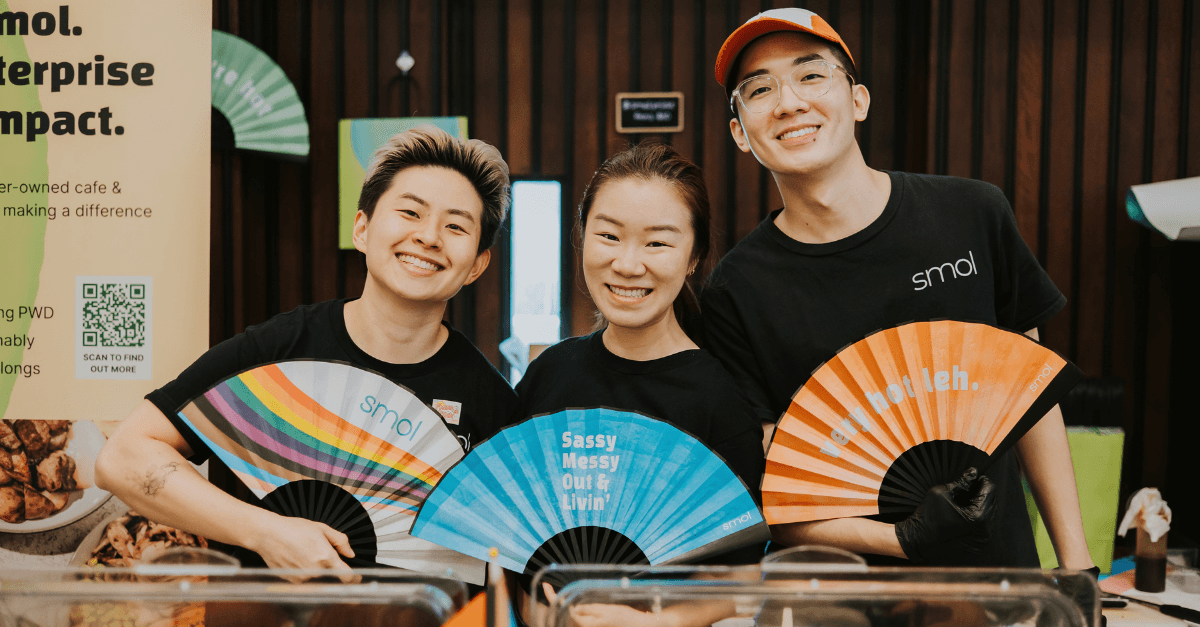
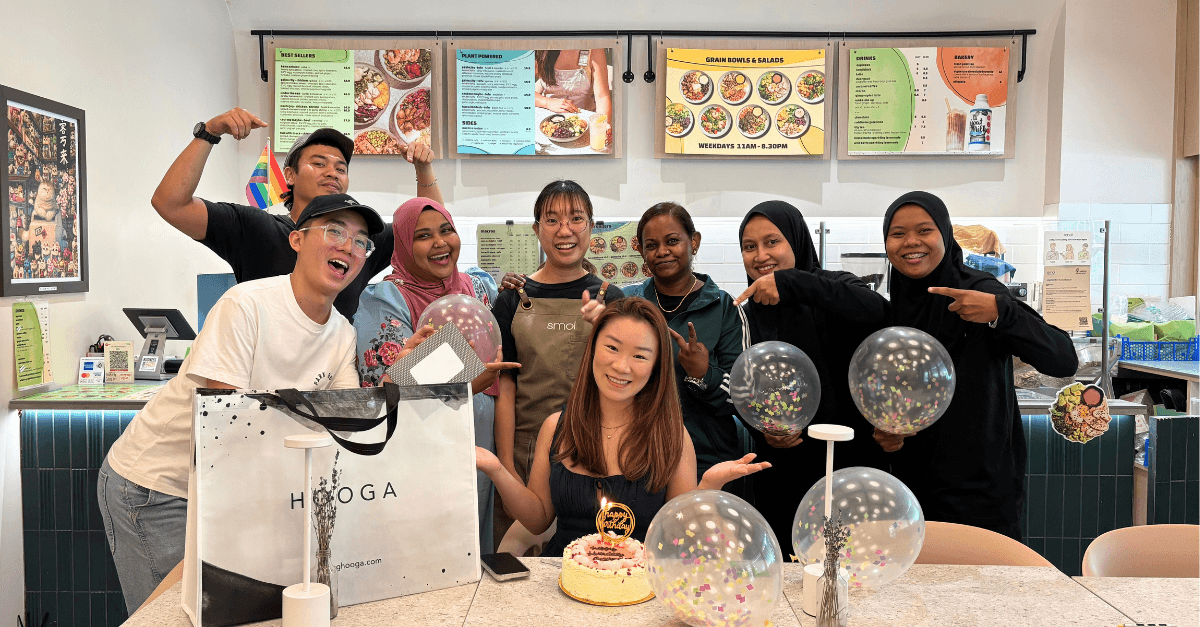
Over time, Wei Wen began to see smol as a café and catering company that welcomes people of all kinds to contribute, as half of smol’s team are PWDs. That changed how he described the business, even to himself – smol wasn't just another small business, but a workplace where everyone has a role to play.
For Wei Wen, the impact of inclusive hiring is clearest in the ordinary rhythm of work. “You see it in the day-to-day operations, from how we support one another to how everyone contributes to the team,” he says.
It’s easy for inclusion at work to become something companies talk about in abstract terms, through policies, pledges and press releases. But inside smol, Wei Wen sees it as a practical question: how can work be structured so people can contribute through their strengths? The answer isn’t a single programme or initiative – it’s a team that works around each other’s strengths and treats this as a normal part of running the business.
Seeing that up close has also changed the way he thinks about what it means for a business to care for its people. Coming from more conventional sales environments, he had often seen “people first” treated as a slogan. At smol, it shows up in daily decisions. “It has made me proud to be part of a company that puts people first, not just numbers,” he says.
Small choices that add up
smol’s approach to doing good also shows up in choices that directly benefit customers. Its menu, for instance, includes gluten-free, vegan and allium-free options, helping people with different dietary needs find something they can eat. Meals also include nutritional information, giving customers more transparency about their food choices.
The company’s community efforts extend to fundraising for groups such as The T Project and Oogachaga. On the environmental side, smol uses biodegradable packaging and works with Yindii to redistribute surplus food. About 90% of smol’s menu features locally grown produce.
None of these choices alone defines the business, but their significance lies in consistency, Wei Wen says. “It’s not just one thing,” he explains. “It adds up across a lot of small, consistent choices.”
When doing good means knowing when to say no
Of course, purpose doesn’t remove commercial pressure. For Wei Wen, some of the clearest tests of upholding purpose come in negotiations with partners and sponsors.
For example, a potential partner might ask for a commission that smol can’t sustainably afford. Saying yes could secure the deal. But if the terms put too much pressure on the business, the cost may ultimately fall on the people and mission the company is trying to support.
As with any business, smol has to balance impact with financial reality. The team may negotiate a better arrangement, find another way to create value for both sides or, when the numbers simply don’t work, walk away. “It can mean we close fewer deals, but we’d rather grow sustainably than compromise the people and mission we’re trying to support,” Wei Wen says.
For a sales professional, this trade-off can be difficult. Yet it has also helped Wei Wen see that a purpose-led business thinks carefully about how it earns profit and what it won’t sacrifice along the way.
What a “Company of Good” means from the inside
Before joining smol, Wei Wen thought of impact mainly as a selling point, something a company could mention to stand out from competitors. Working at smol has changed that view.
He has seen that genuine impact can itself be the reason people want to work with a business. Partners and clients pay attention to whether a company’s actions match what it claims to believe. And when they do, that consistency can build trust and stronger, longer-term relationships.
“To me, being a ‘Company of Good’ means that doing good isn’t just something we put in a pitch deck or talk about externally,” he says. “It’s something that should be reflected in how we actually run the business every day.”
For smol, that means looking at how the team works with partners, treats its people, makes decisions and delivers for customers. It means making inclusive hiring part of operations, and finding practical ways to reduce waste and improve accessibility. And, more importantly, it means protecting those priorities even when a tempting deal is on the table.
Wei Wen now sees good business and good impact not as competing priorities, but as two halves of one whole. As a “Company of Good”, smol built a business where every tender, meal, partnership and decision moves both the company and the people around it forward.
Read more #StoriesofGood here : COG 10 A Decade of Doing Good